

One term that’s often used in all ground investigation reports, but never really explained clearly, is soil bearing capacity. Although it may sound technical, it means different soils can support very different loads. So, soil bearing capacity is a major consideration when deciding which type of foundation suits a building.
In this guide, we’ll unpack what soil bearing capacity really means and how it can affect the choice of foundation, how it’s measured on-site, the most commonly found soil types in and around the South East, and how screw pile underpinning can give you a solid foundation even on poor near-surface soil.
What is soil bearing capacity?
Soil bearing capacity describes how much pressure soil can withstand without shear failure (collapsing) or excessive settlement (sinking). The key factors in this are soil type, density, and its shear strength.
For something so important, the term soil bearing capacity is rarely fully explained and is often used as a catch-all phrase in reports. But inside the construction industry, structural engineers actually use three specific variations for ground investigation reports based on safety and soil movement:
Ultimate bearing capacity
This variation is the maximum pressure the soil can safely take before shear failure, which can cause collapse and foundations to slip out from under the building.
Net bearing capacity
This refers to the pressure the soil can support from the foundation after allowing for the weight of the soil already at foundation level. Engineers apply a factor of safety (between 2 and 3) to provide a safe margin.
Allowable bearing capacity
This is the bearing pressure considered safe for the foundation. Again, engineers apply a factor of safety (between 2 and 3) before adjusting it to make sure the building doesn’t settle or sink too much.
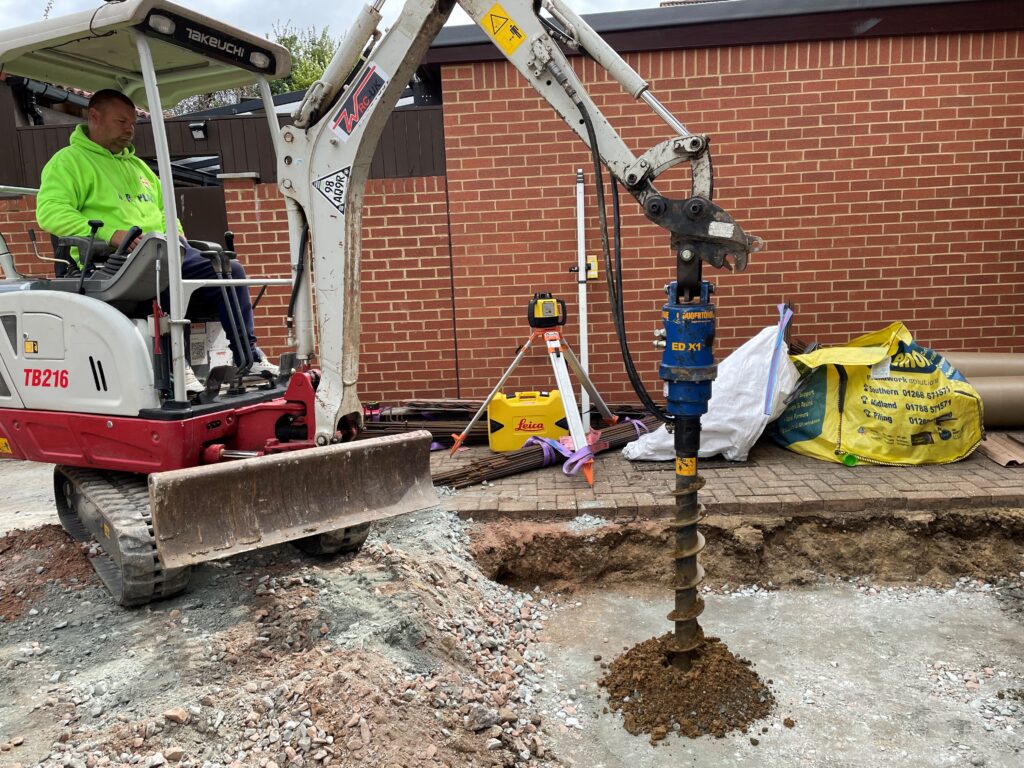
By applying a level of bearing capacity, engineers can specify what type of building foundation is needed, how deep it should be, and which building techniques best suit the site. Bearing capacities can vary depending on how deep the foundations are – the deeper the foundation, the higher the bearing capacity.
What affects the soil bearing capacity?
The specific variation of soil bearing capacity used can be affected by different physical and environmental factors. These factors differ from site to site, but can include:
Soil type
Different soil types don’t behave in the same way, so rock or dense gravel can deliver a high bearing capacity, while silt, sand, or clay have lower capacity.
Moisture content
Excess water will weaken soil, making it unstable and reducing its bearing capacity. Clay soil also holds moisture, so it expands, affecting how much pressure it can support.
Foundation shape and depth
A deeper foundation gives a higher bearing capacity because the surrounding soil is more compacted. A wider foundation footing can also help spread the load.
Topography
The flatter the land, the more stable the build. Projects built on sloping land can increase the risk of lateral sliding or movement.
How is soil bearing capacity measured?
A detailed assessment of soil bearing capacity can help keep a building stable and safe for decades. Measured in kilonewtons per square metre (kN/m²), bearing capacity is assessed using different methods depending on the project. Structural and civil engineers, architects, and specifiers follow the guidance in BS 8004 – Code of practice for foundations (BS 8004:2015+A1:2020), published by the British Standards Institution (BSI).
For smaller or domestic builds and extensions with standard strip foundations, measurements are based on readily available presumptive values. However, further tests may be needed, including a trial pit or plate load test to measure how the soil reacts to weight.
For larger or more commercial projects, engineers use more site-specific methods to measure bearing capacity. These include Standard Penetration Testing (SPT) during borehole drilling or Cone Penetration Testing (CPT) to measure the strength and consistency of different soil layers.
Capacity measurements must be verified through further on-site investigations, but all soil samples can also be lab-tested for strength, density, moisture content, and other characteristics. The results ensure construction decisions are based on accurate data from the site itself.
What are typical soil values for the South East?
Soil types across the UK differ greatly from region to region. In the South East, where Preformed Substructures carries out most of its screw pile foundations work, soil types usually fall into four main categories, each with a range of typical bearing capacities benchmarked by BS 8004.
Heavy clay soil
This soil type, also known as London Clay, covers much of the South East. The typical bearing capacity ranges from 75-150 kN/m² for firm clay to 150-300 kN/m² for stiff clay. However, moisture can affect its capacity.
Chalk and lime-rich soil
White limestone rock (chalk) is found across much of the South of England and has a high bearing capacity of between 200-600 kN/m². But it can contain cavities and voids, so uniform strength can’t be guaranteed and will need inspection and site-specific tests for soft spots.
Gravel soil
With visible particles, dense gravel soil can support 200-600 kN/m² and is generally a low-risk soil type and more straightforward to build on. It’s an exceptional founding material, especially when mixed with sand.
Made ground
With a bearing capacity of under 50 kN/m², made ground is made of mixed layers of rubble, topsoil, brick, or organic material and is unpredictable. Composition and depth can vary significantly across a single site, which is why trial pits (usually a minimum of three on a domestic plot) are commissioned before finalising a foundation design.
When should specialist piling be used for foundations?
Where there’s made ground, very soft clay, or other poor ground with low bearing capacity, standard strip foundations can be impractical because they need to be progressively widened to spread the load safely. If this is the case, there are options to increase the bearing capacity, including:
- removing the poor ground and founding on stronger soil below
- using a raft foundation where the weak layer is shallow and stable, and loads are relatively low
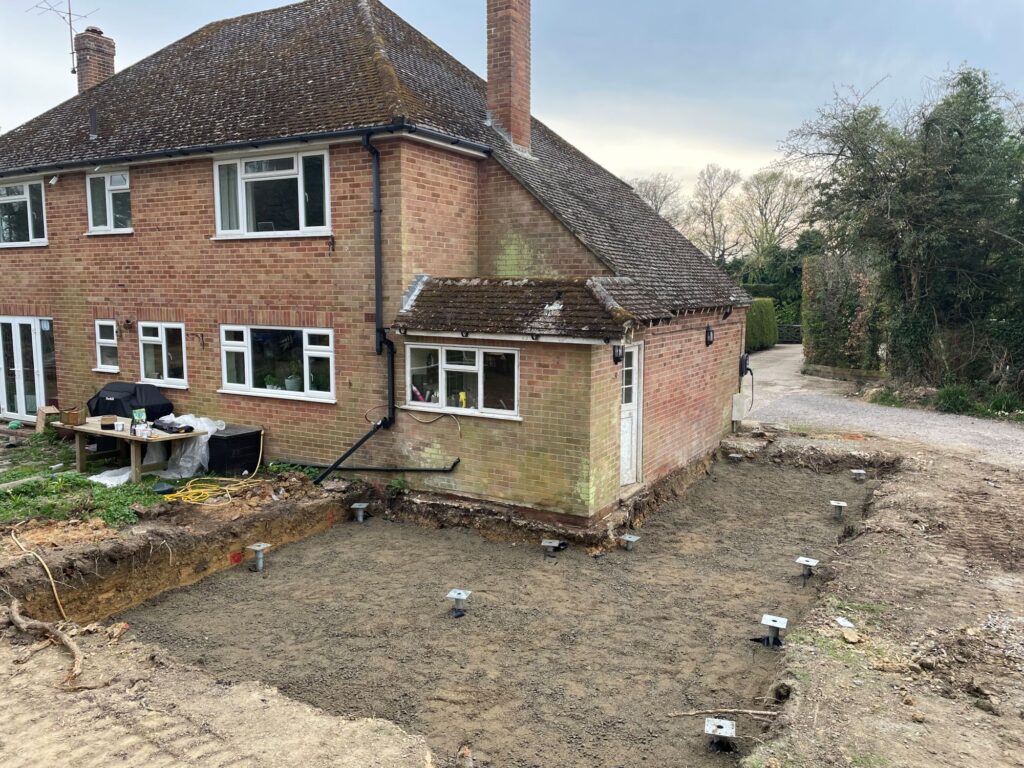
- using piles to take loads through poor ground to a stronger load-bearing stratum
This is where screw piling and underpinning can stabilise failing foundations more effectively. Preformed Substructures’ GoliathTech helical pile and ground beam system transfers structural loads through weak or made ground to stronger soil or rock below, with bearing capacities of up to 300 kN per pile, depending on ground conditions.
The system can be installed through access as narrow as a single doorway and, because it requires minimal excavation, it’s well suited to sites where traditional foundations could damage protected tree roots.
Could screw piling be right for your project?
If poor ground or soil types make conventional foundations a non-starter, Preformed Substructures can help with a practical alternative. Our screw pile supply and install service transfers structural loads through weak near-surface soils to stronger ground below, with minimal excavation and disruption.
Contact us today to discuss your project and see whether screw piling can provide the foundation support you need.
continue reading